
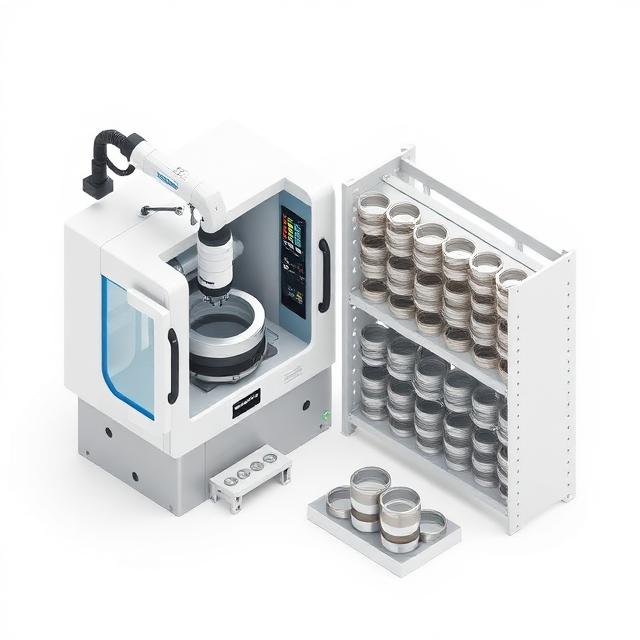
Machine tool loading and unloading
Automatic loading and unloading of workpieces on machining and grinding machines — without constant attendance and with a steady flow of parts into and out of the machine.
Machine infeed and outfeed without an operator.
Infeed and outfeed automation links a machining or grinding machine to the logistics around it. Parts are fed into the machine and finished pieces removed automatically — the operator only replenishes the supply of parts and takes away the finished ones. We design each solution around the part shape, the machine cycle and how parts are delivered.
At the infeed, parts are loaded arranged in crates or magazines. More often, though, parts arrive unordered and loose in crates; these are fed into the machine by a vibratory feeder or a robotic bin-picking application. At the outfeed, finished parts drop down a sliding chute into crates and fill them row by row. Full crates are pushed onto a roller track and empty ones are supplied by a destacker.
As an alternative to purpose-built mechanisms we offer robotic handling. For a higher cycle rate and heavier parts we use a conventional 6-axis industrial robot in a fenced cell; where flexibility and close cooperation with the operator in a small space are needed, we use a collaborative robot (cobot) that works without full fencing, with safety sensing. The robot loads and removes parts directly from the machine fixture, and one arm can serve several machines.
Solution visualisations.
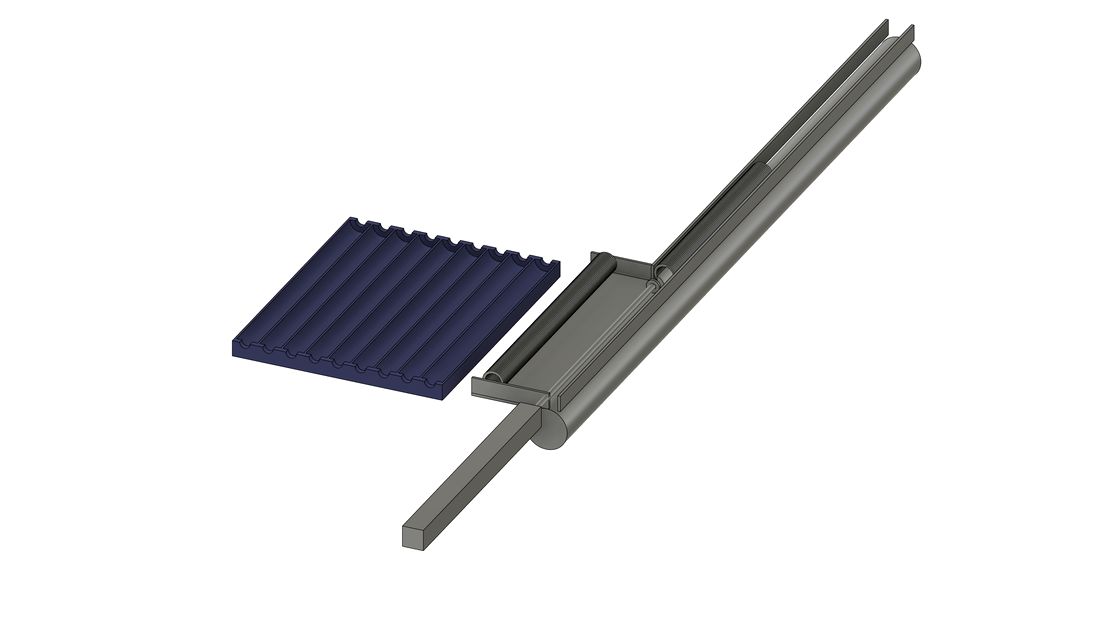
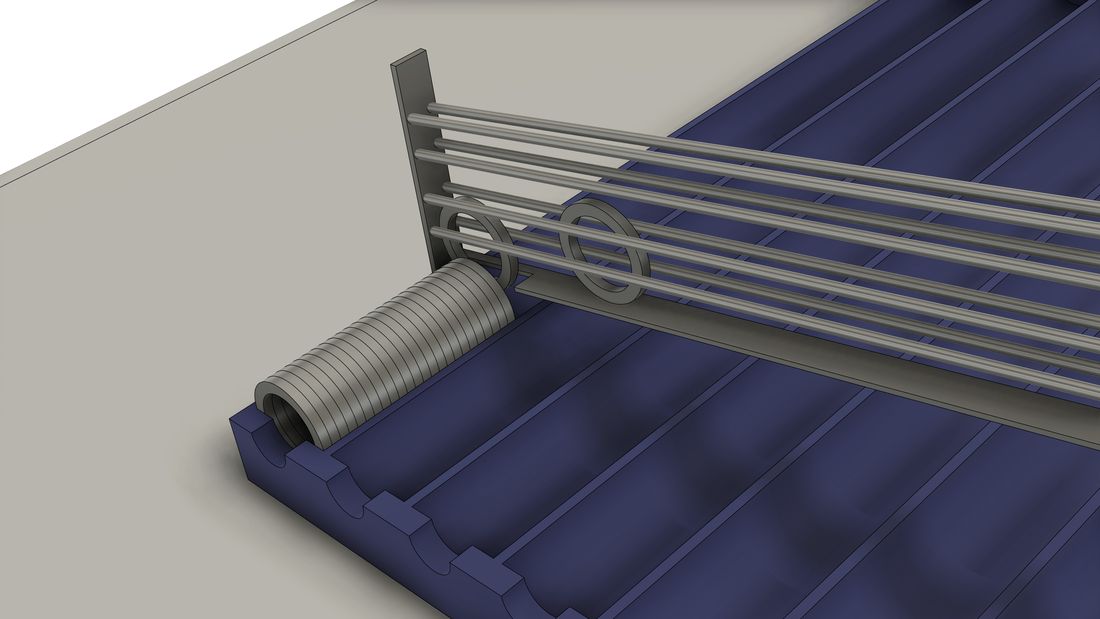
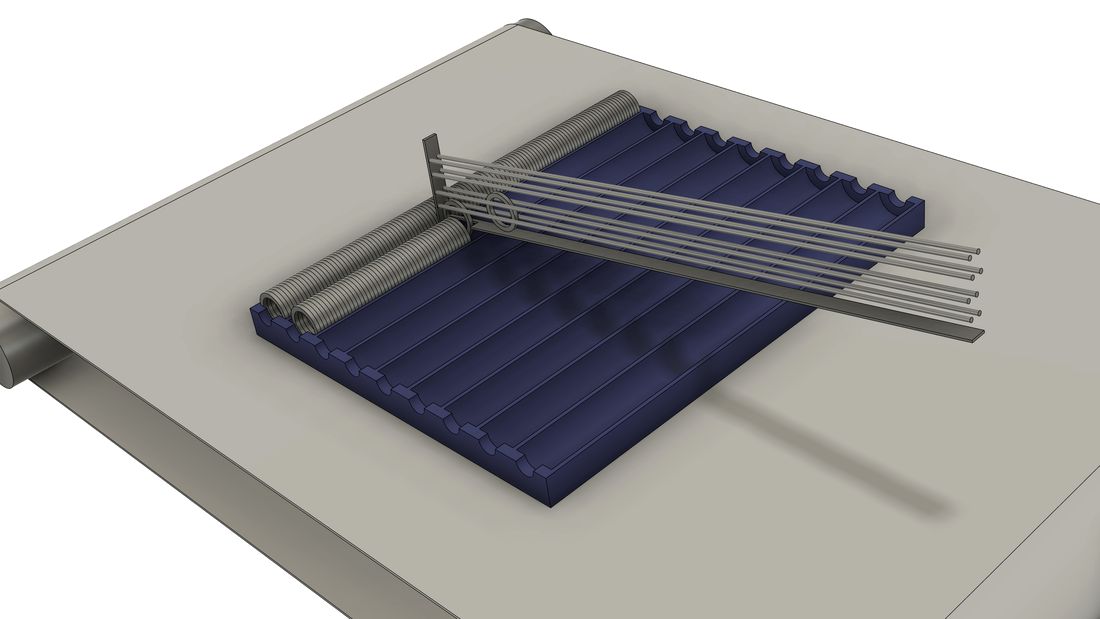
What the automation handles.
- Automatic loading of parts into the machine, with the workpieces held and supported throughout
- Unloading via a sliding chute into crates — filled row by row across the crate
- Destacker for empty crates, for continuous running without operator intervention
- Roller track as a buffer for full crates — it lengthens the interval between operator visits
- Infeed magazine with automatic replenishment and joining of part rows
- Matched to the machine cycle — the infeed stays filled throughout
- Robotic handling — a conventional 6-axis industrial robot for a higher cycle rate and heavier parts, or a collaborative robot (cobot) for fenceless work alongside the operator
- Direct loading and removal of parts from the machine fixture; one robot can serve several machines at once
Specifications.
The actual design is adapted to the machine, the part and the cycle.
| ■Loading (infeed) | Mandrel / gripper loading of parts row by row |
| ■Unloading (outfeed) | Sliding chute + crate transfer conveyor |
| ■Crate supply | Destacker for empty crates + roller track for full ones |
| ■Robotic handling | Conventional 6-axis robot or collaborative robot (cobot) |
| ■Operation | Push-buttons and a touch display (HMI) on the machine |
| ■Control system | PLC, can be linked to a higher-level system |
| ■Safety | Guarding, infeed protected by a light curtain |
| ■Customisation | To the machine type, the part and the required cycle rate |
Where it is used.
- Grinding — face and cylindrical grinders, handling of rings and parts
- Machining — lathes, milling machines and CNC machining centres
- Bearings and engineered parts — rings, shafts, bushings
- Series production — high cycle rate and repeated handling
- Multi-machine tending — one operator runs several machines
- Links to conveyors and palletising in the plant